

Jump to section
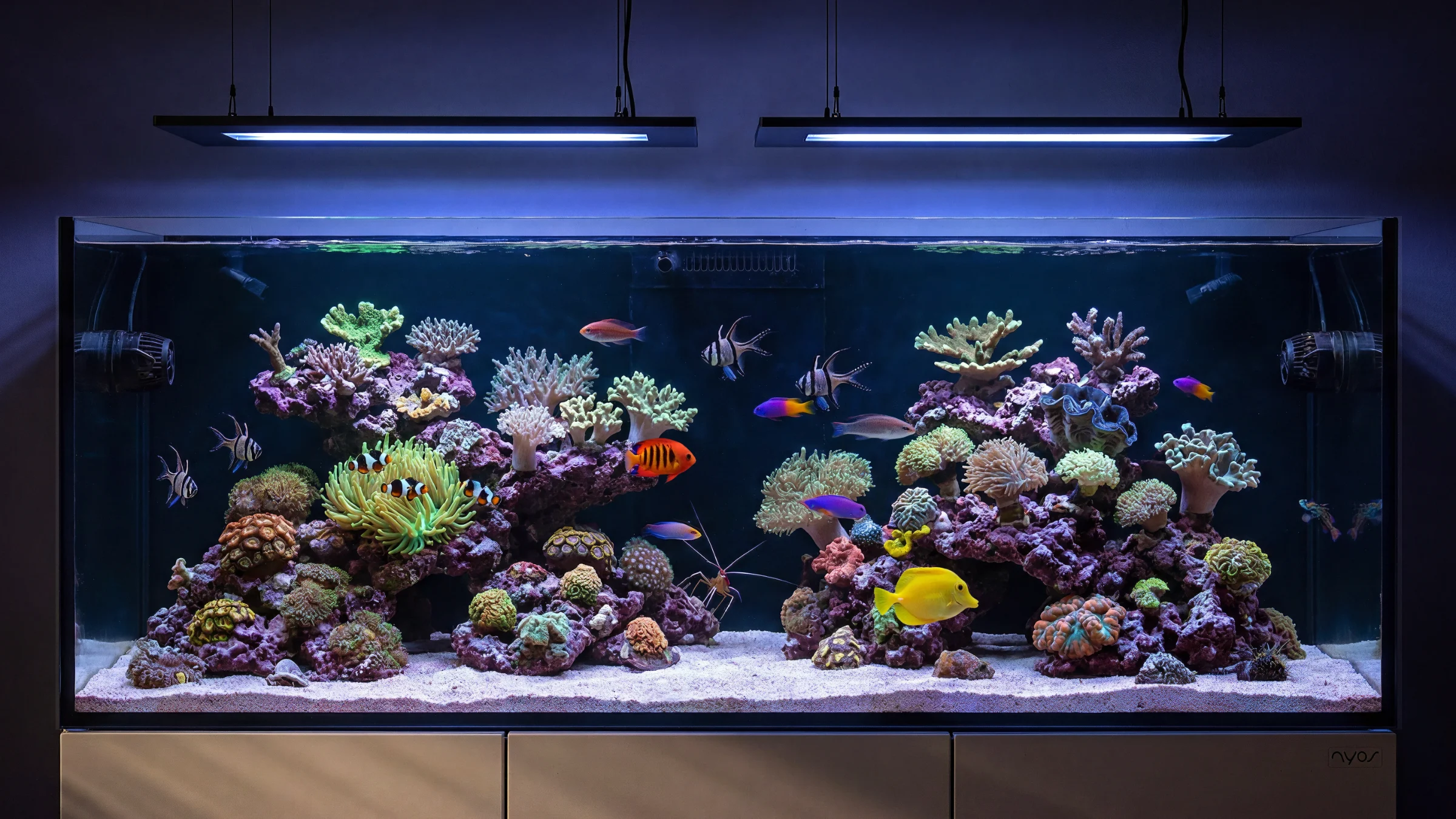
Saltwater has a reputation for being expensive and unforgiving. It earned that reputation from people who bought a tank on Saturday and fish on Sunday. The hobby is genuinely easier than its myth, if the system is planned as a whole before any water moves. That's the premise of this guide and of ReefPicker itself: plan the build like a PC build. Parts first, compatibility checked, budget visible, then purchase.
Decide what you want to keep
Every good reef starts from the animals, not the glass. A pair of clownfish and soft corals ask for very little. A mandarin dragonet quietly demands a mature tank full of live prey. A tang needs swimming length you can't retrofit. Write down the three or four animals you actually care about — the ones you'd build the tank for — and let them dictate everything downstream: volume, rockwork, light, flow.
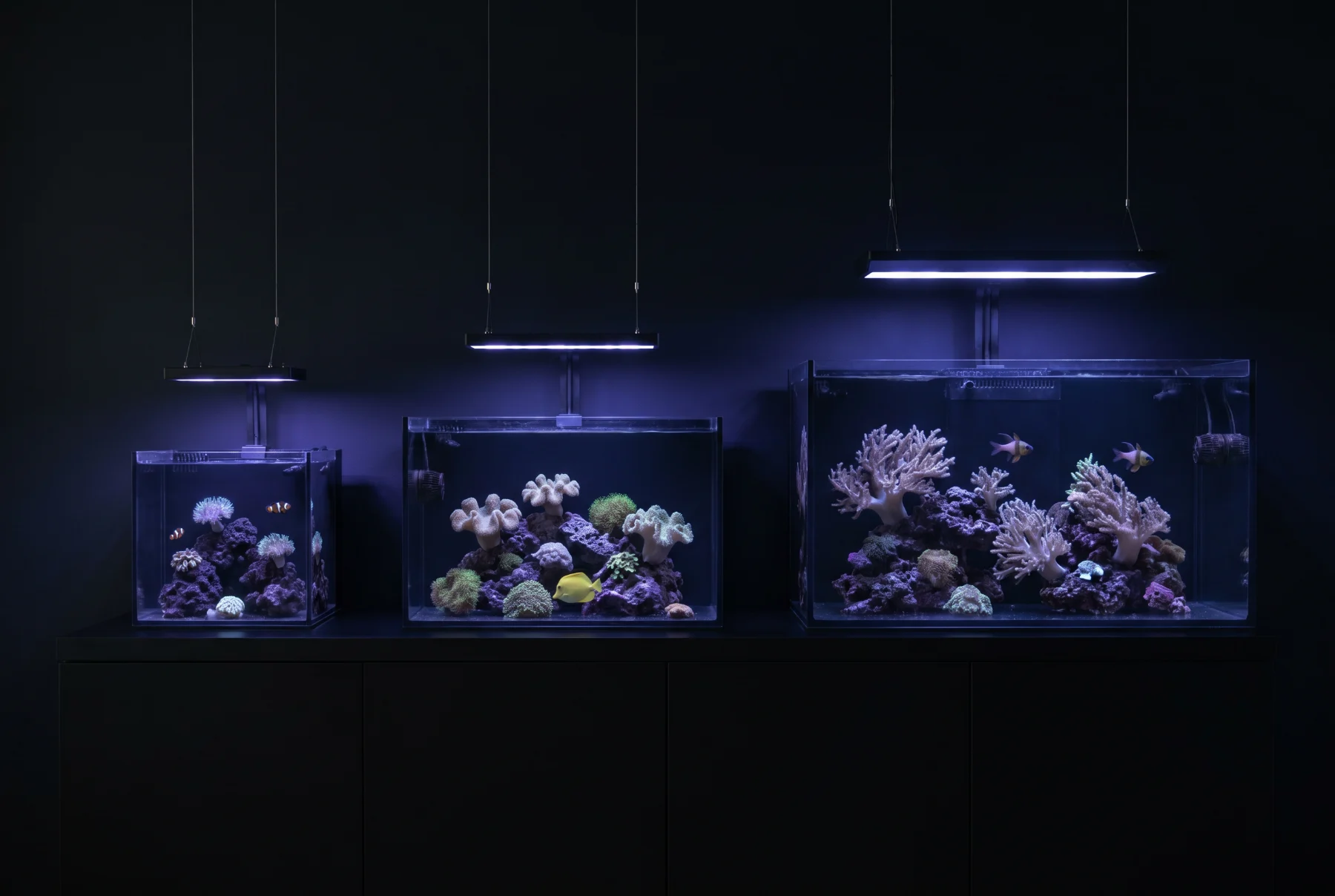
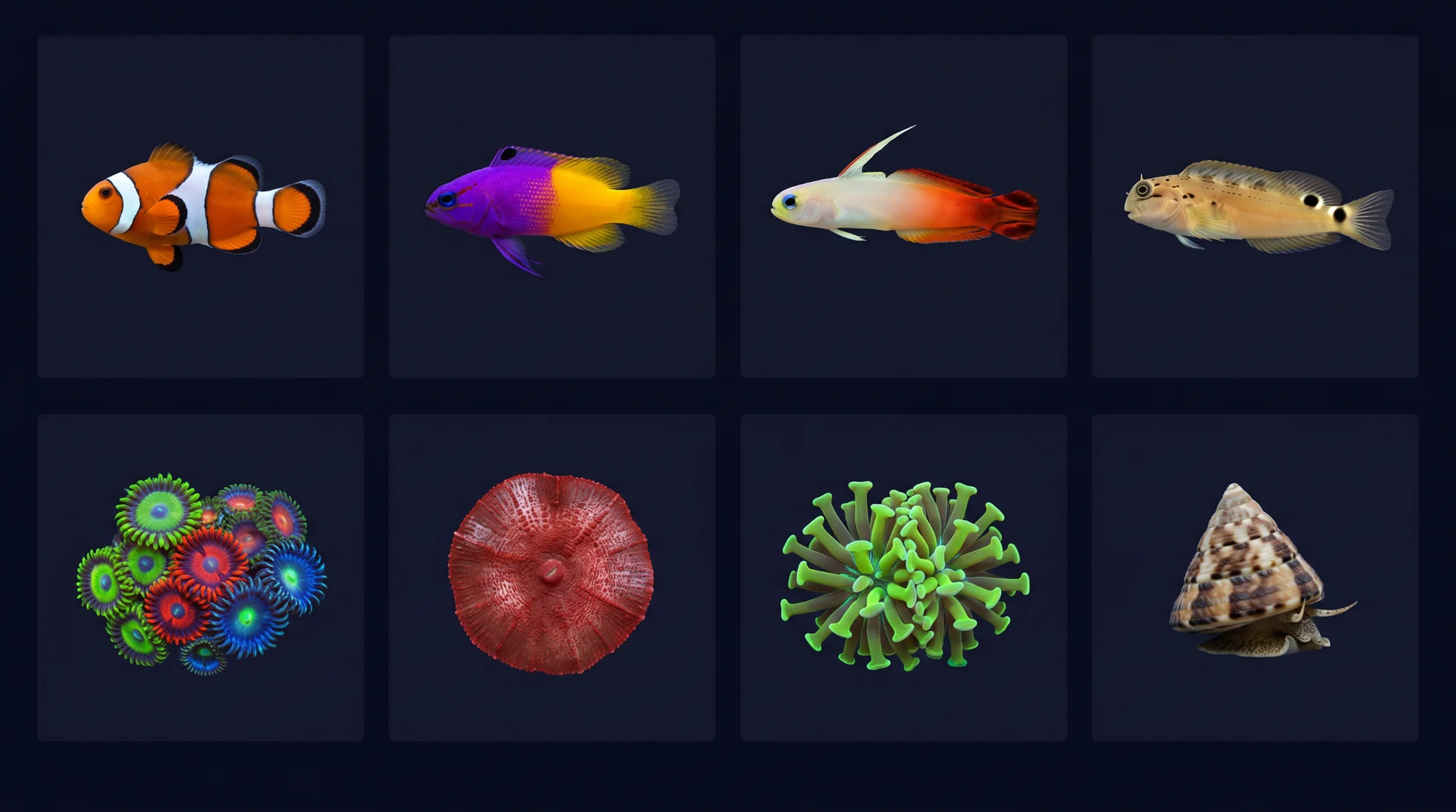
A realistic first-reef wishlist: two clownfish, a royal gramma, a cleanup crew, and soft corals — mushrooms, zoanthids, leathers. Everything in this guide assumes roughly that. It's forgiving, it's colorful, and it will keep you busy for years.
Size the tank to your life
Bigger is more stable, because more water means slower swings in temperature and chemistry. Bigger is also heavier, dearer and harder to place. The beginner sweet spot is 40 to 75 gal (150–285 L): enough volume to forgive mistakes, small enough to live in a normal room. Remember the practical physics too. A running reef weighs about ten pounds per gallon, which makes a 75 gal (285 L) system a piano. Pick the floor, the wall and the power outlet before you pick the tank.
All-in-one (AIO) tanks with a rear filtration wall are the gentlest entry. Tanks drilled for a sump — like most of what you'll compare in the builder — give you room to grow. Either works; what matters is deciding now, because plumbing is not an afterthought.
Buy boring, proven equipment
The equipment list for a soft-coral reef is shorter than forums make it look: a light, two heaters (redundancy is cheaper than a crash), flow pumps, a return pump, and an auto top-off. A protein skimmer is optional in year one if you stay disciplined with water changes. What you should not do is experiment with no-name hardware on your first build. Lighting from Aqua Illumination, flow from EcoTech Marine, or a pendant from Kessil will outlive your first three aquascapes.
These names dominate because they actually work over five-plus years of salt, heat, and humidity. In this hobby, buy once, cry once.
— every reefer who bought cheap twice
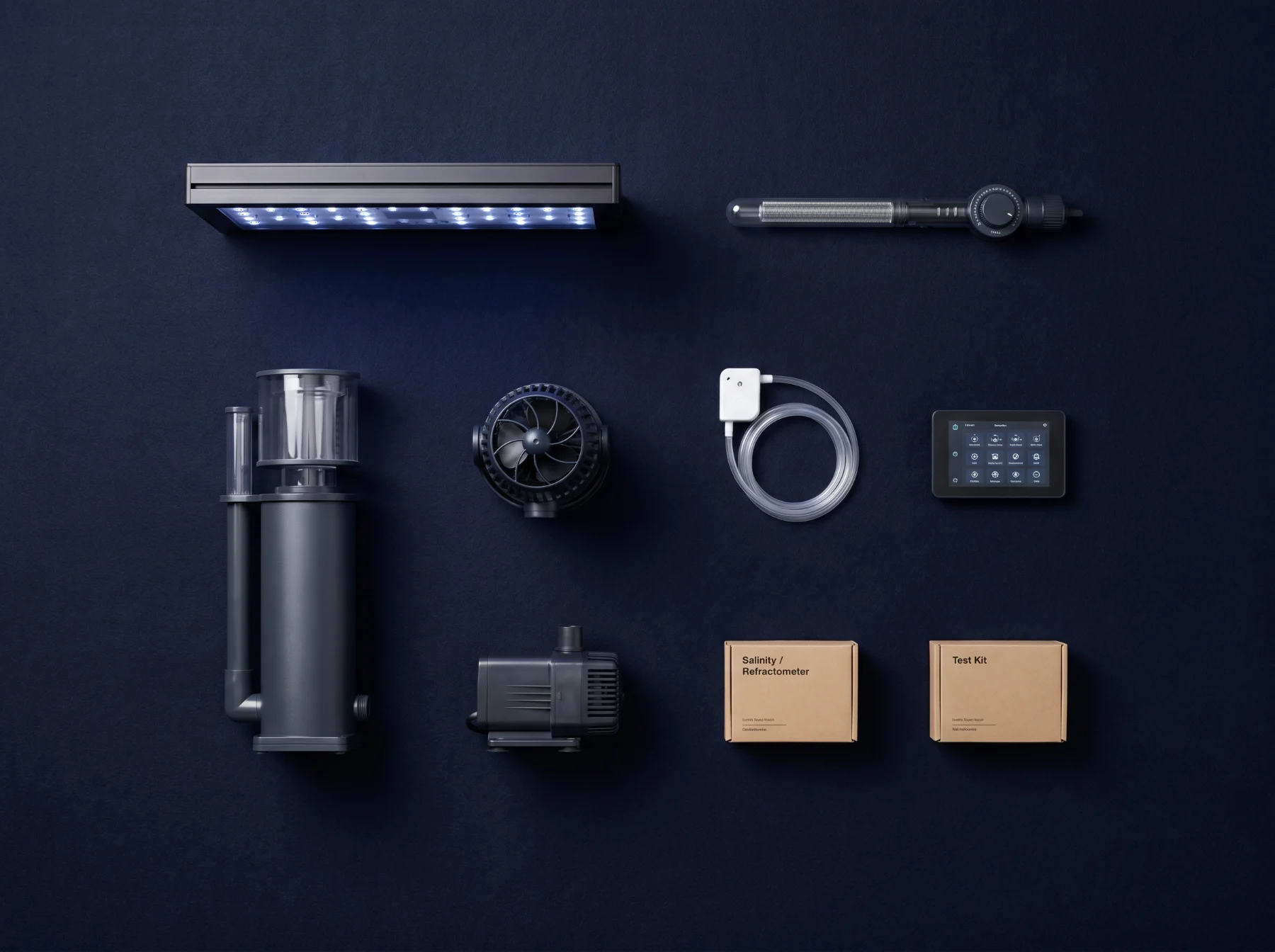
This is exactly where a parts-picker pays for itself: every item above has a compatibility relationship with your tank — light coverage to footprint, pump rating to volume, heater wattage to gallons. The builder checks those locks for you as you go.
Cycle before anything breathes
An aquarium isn't ready when it's full of water; it's ready when it's full of bacteria. The nitrogen cycle — ammonia to nitrite to nitrate — takes six to eight weeks to establish, and there is no honest shortcut. Dose ammonia (or use a hardy bacterial starter), test twice a week, and watch the curve hand off from one compound to the next.
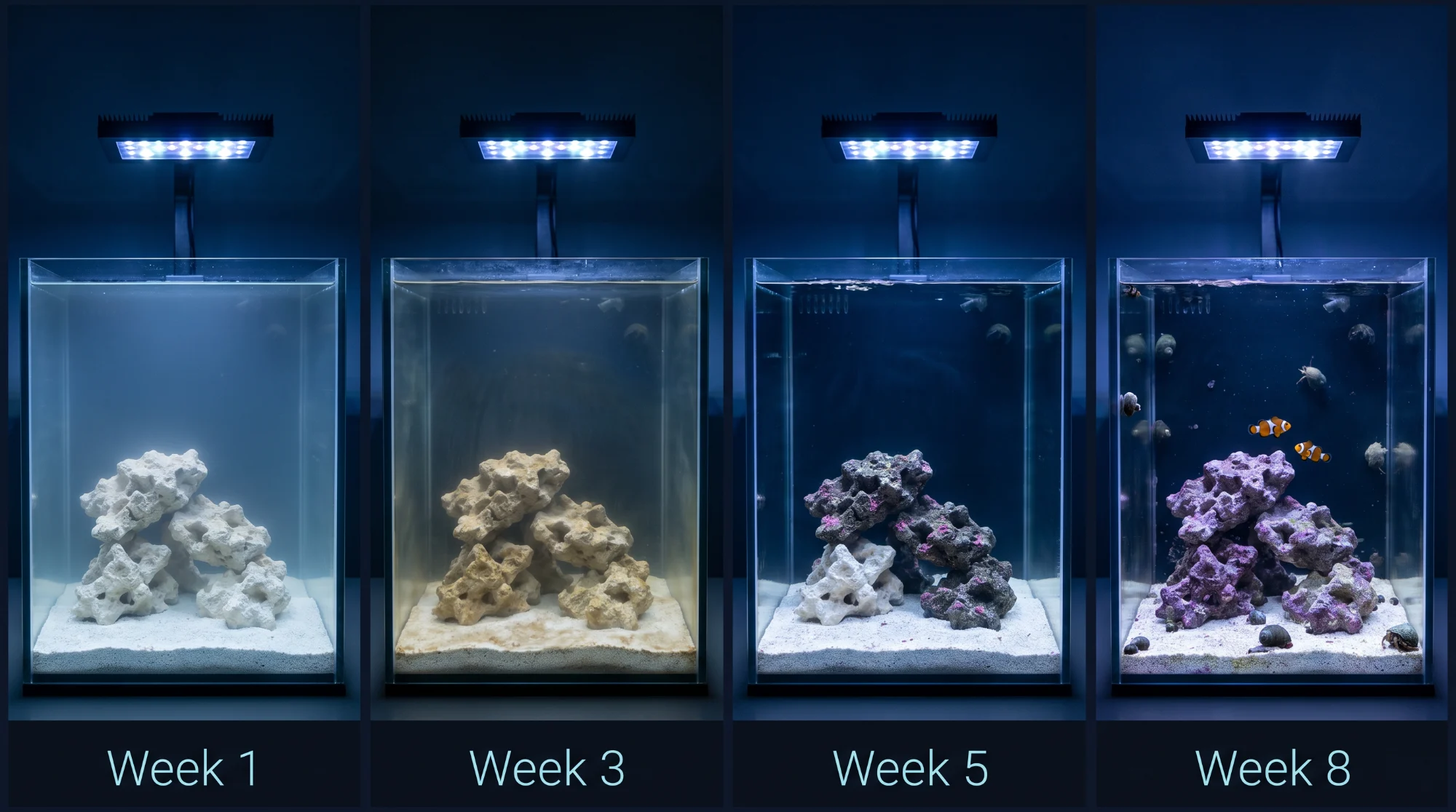
Stock slow. Slower than that.
Every animal added is a load increase on a young bacterial colony. The classic beginner failure is adding everything in month one and watching the system buckle in month two. The order below is conservative on purpose — it is also the order your tank will quietly thank you for.
Cleanup crew Week 8–9
Snails and hermits first. They process the early algae bloom every new tank gets, and they're the gentlest possible bio-load.
First fish Month 2–3
The clownfish pair, then the gramma a few weeks later. One addition at a time, two weeks apart, watching parameters after each.
Soft corals Month 4–5
Mushrooms, zoanthids, leathers. They tolerate beginner chemistry and show you, by their extension, how stable the tank really is.
LPS corals Month 6+
Hammers, torches, candy canes — once alkalinity holds steady between water changes without correction.
SPS corals Year 2+
Acropora and friends demand the stability only time builds. They are the reward for everything above, not the starting point.
Salt, water, and the testing habit
Reef keeping is mostly water keeping. Start with RO/DI water — tap water carries silicates and metals that fuel ugly algae — and a quality salt mix to 1.025–1.026 specific gravity. Then build the one habit that separates thriving tanks from struggling ones: a weekly ritual. Test salinity, alkalinity, and nitrate; change ten percent of the water; top up the ATO reservoir. Twenty minutes, same day every week.
Log every number. Trends matter more than readings — a slowly falling alkalinity tells you something a single test never will.
What it actually costs
Honest numbers, mid-2026, for the 40–75 gal (150–285 L) soft-coral build above. Expect $2,000–3,500 all-in for the dry goods: roughly $900–1,500 for tank, stand, and sump; $300–700 for lighting; $400–800 for flow, heat, and top-off; and the remainder in rock, salt, and test kits. Livestock for the first year adds $400–600, spread across many months by the stocking order above. Running costs land near $50 a month in salt, electricity, and consumables.
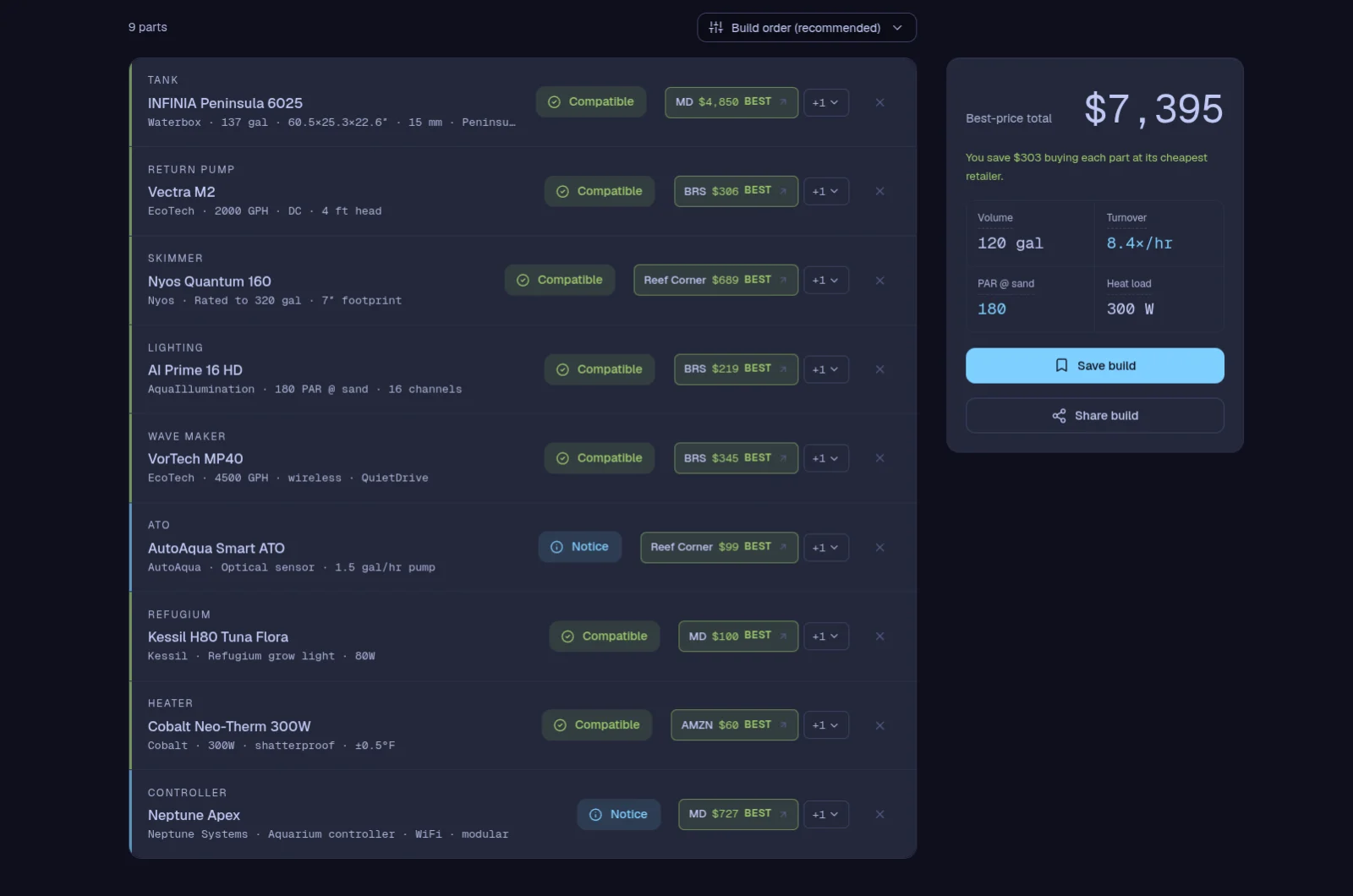
So build the parts list first. Watch the running total, swap components until the budget fits, and only then buy — once, in the right order.